
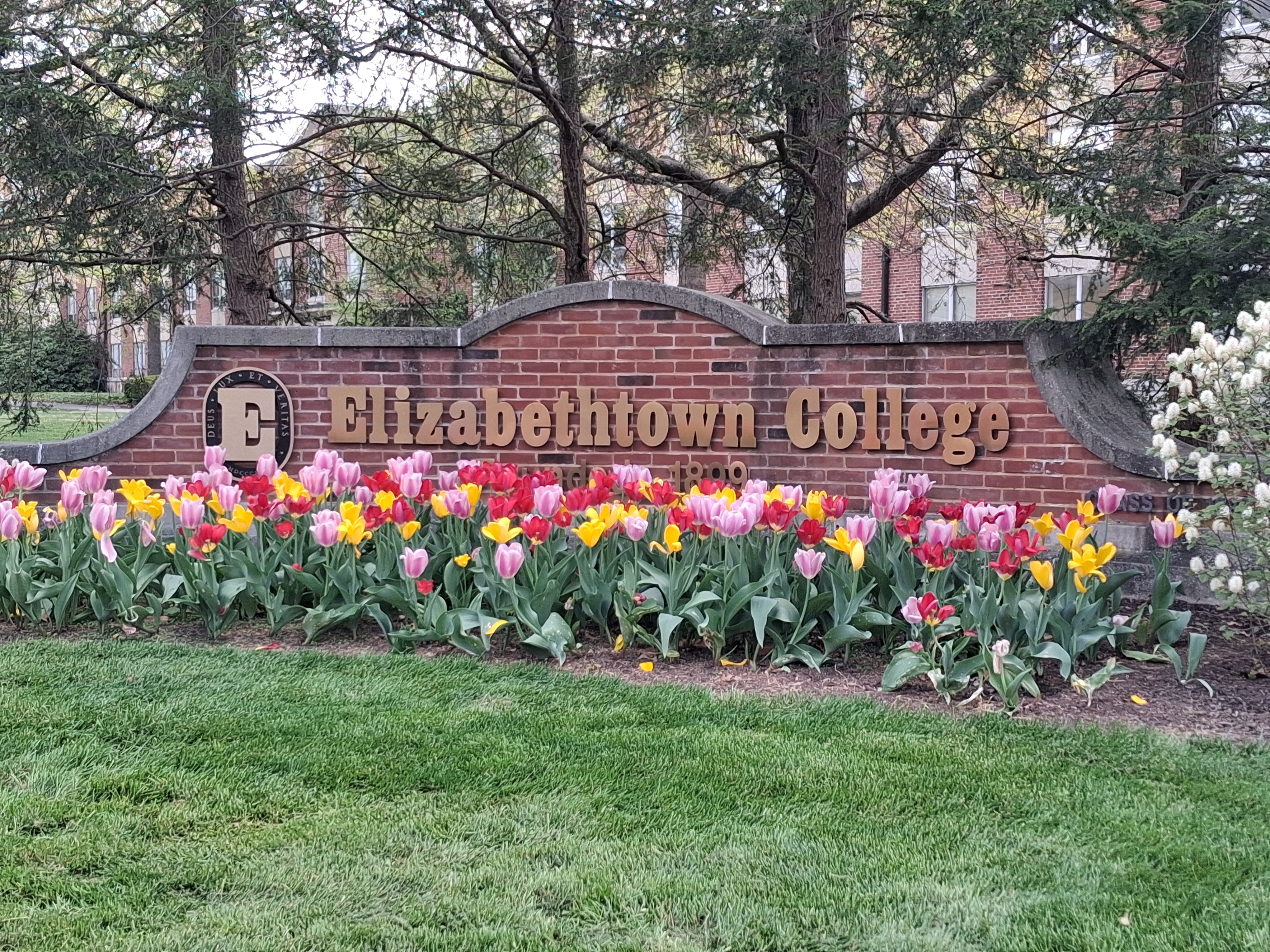
Two new majors are being added to Elizabethtown College. Starting in the Fall 2026 semester, the interdisciplinary majors, Interaction Design & User Experience (IxD) and Nutrition & Human Performance, are expected to prepare prospective students for careers in their respective growing industries.
IxD majors will focus on developing digital systems and interfaces with human users in mind. In addition to making these systems user-friendly, students will also learn how to make them marketable. The major falls under the School of Arts and Humanities.
“Interaction Design & User Experience is mostly a blend of graphic design and computer science,” Dr. Tara Moore, director of the IxD program, said. Moore is also director of the graphic design program. “It doesn’t go into all of the arts the way a graphic design major does, but it does focus on storytelling and visual communications and then blending that with some computer science skills like applications and data systems, and it’s also adding in a marketing component.”
Moore led the effort to create the IxD major in the spring of 2025 after listening to students in advising sessions who were combining majors and minors in graphic design and computer science to create their own pathways into the IxD field.
“I used that information and had some conversations with our computer science faculty,” Moore said. “As a result, we felt like we could turn this path that students were already following on their own into a formal major and a formal minor.”
Graduates with this major will be able to pursue careers in technology design and content strategy in charge of developing platforms such as mobile apps or websites. As technology progresses, more professionals will be needed to meet the demand for designing tech interfaces.
“Without the interactive design component, you might get some wonky, unpleasant interfaces or apps. [IxD] brings in that human awareness,” Moore said. “As we have humans interacting with computers—it’s not just the pure code—we need to be thinking about the marketing side of bringing users through the process in a way where they develop good feelings about the company.”
Two new courses will be introduced specifically for IxD: Usability & Technical Writing, taught by Moore, and Interactive Design Research Experience. The complete course catalog is not yet publicly available, but Moore said that IxD will be a declarable major next academic year and marketing has been promoting it.
“Marketing has done a great job,” Moore said. “I’ve already heard that there’s interest.”
The Nutrition & Human Performance major, run by the School of Sciences and Heath, will focus on the impacts of nutrition and wellness on human athletic performance. Its program will consist of courses in nutrition and exercise science. Students will be able to participate in hands-on learning in campus facilities including the Human Performance Lab located in the Bowers Center. As with IxD, the course catalog for Nutrition & Human Performance has not yet been published.
“This exciting new academic offering reflects Elizabethtown College’s commitment to expanding dynamic, in-demand programs that prepare students for both graduate study and impactful careers in health and wellness,” Dean of the School of Sciences and Health Dr. Alan Utter said.
Among the potential careers for students in Nutrition & Human Wellness are health coach, food and nutrition program specialist, food market specialist or pharmaceutical or supplement sales representative. The undergraduate degree also gives a pathway for graduate programs that contributes to becoming a Registered Dietitian Nutritionist.
Much like the technology careers for IxD, career opportunities in nutrition are expected to increase in the coming years.
“These new programs represent the kind of forward-thinking, interdisciplinary approach that defines a dynamic Etown education,” Vice President for Enrollment, Marketing & Communications Keri Straub said. “Our students are committed to addressing complex, real-world challenges through creativity and a dedication to improving lives. These new academic offerings provide meaningful opportunities to support and advance that work.”