Cracker Barrel’s logo redesign lasted just eight days before the company pulled the plug and brought back its “Old Timer.” In branding years, that’s about as fast as a fire drill. The about-face has sparked plenty of debate: did the company bow to bullying or did it make a savvy business decision after hearing from customers?
The answer might be both, but it’s also worth asking whether Cracker Barrel needed this scandal to get people paying attention again.
The rebrand was meant to symbolize change. On Aug. 18, Cracker Barrel launched its “All the More” campaign, part of a $700 million transformation effort under a new CEO. That transformation included store renovations, a new pricing strategy and a push to lure younger, more diverse diners.
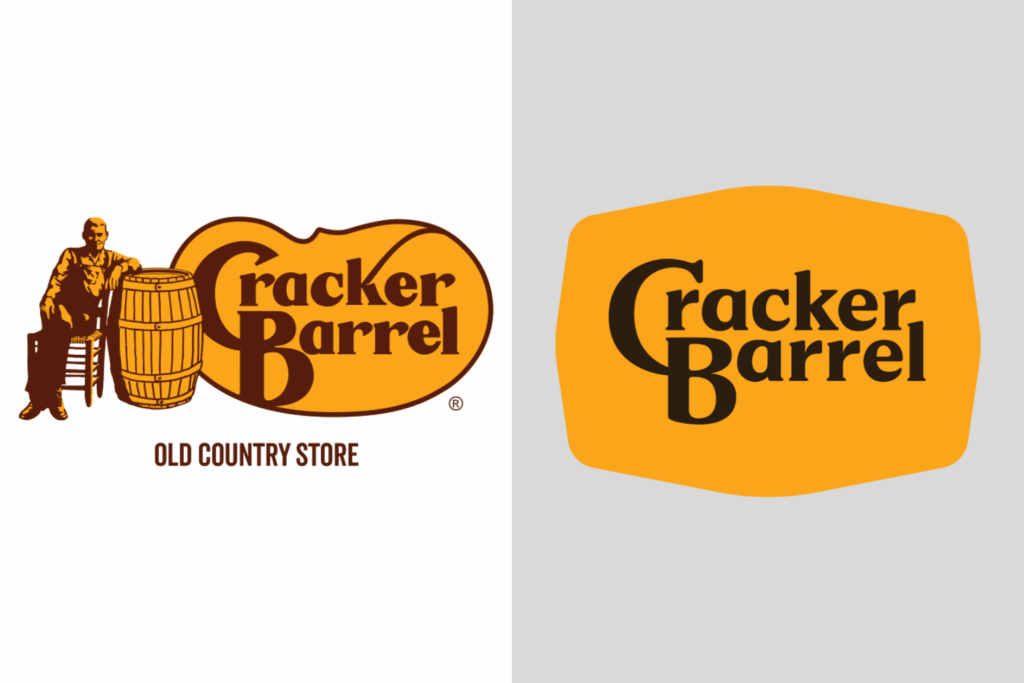
The new logo, a stripped-down wordmark inside a barrel outline, was supposed to signal modernization. Out went Uncle Herschel, the old man perched on a chair beside a barrel, who had anchored the brand since 1969. In came sleek minimalism.
The problem? Cracker Barrel’s entire identity rests on nostalgia. Its stores aren’t just restaurants, they’re museums of Americana, complete with rocking chairs and checkerboards. For loyal customers, the Old Timer isn’t just a logo. He’s a symbol of comfort, family road trips and a particular slice of country life. Remove him, and you don’t just change the logo, you threaten the story customers have been telling themselves for decades.
Backlash came swiftly. Within hours, critics accused the company of abandoning its roots. Social media pressure snowballed into political fodder, and by Aug. 26 the company surrendered. “Our new logo is going away, and our ‘Old Timer’ will remain,” Cracker Barrel wrote on X.
It’s easy to frame this as weakness, but the reversal also generated more buzz for Cracker Barrel than it’s had in years. Stock prices dipped during the backlash, but the controversy dominated headlines. For a company struggling with declining traffic and slipping lower-income customers, the uproar was a marketing spotlight money can’t buy.
Think about it: When was the last time Cracker Barrel was the center of a national conversation? The logo fight put the chain on the cultural map again. The controversy rivaled debates about Bud Light and woke capitalism and reminded millions of customers that the Old Timer still exists.
There’s a danger here, of course. Scandals can scar a brand as much as they can revive it. Bud Light hasn’t recovered from its backlash, and Cracker Barrel risks looking timid or indecisive. But in the short term, the company has accomplished something it badly needed: relevance. The scandal reminded loyalists why they love the brand and signaled to investors that management is responsive, even if that response was a retreat.
The irony is that Cracker Barrel’s modernization strategy may now be harder to execute. You can update menus and tweak pricing quietly, but change the logo and suddenly you’re accused of changing America itself. Still, the episode shows how much symbolic power the brand carries. A simple line drawing of an old man and a barrel can ignite a week-long national firestorm.
So, did Cracker Barrel cave to pressure? Yes. Was it also shrewd business? Probably. And in a media environment where attention is currency, the company may have stumbled onto the best publicity it’s had in years. The Old Timer is back and so is Cracker Barrel in the national spotlight.