
The rapidly escalating conflict involving the United States, Israel and Iran is sending shockwaves through global energy markets and supply chains, raising the risk of higher inflation and a potential global recession if disruptions persist.
Oil prices have already surged as the conflict threatens shipping through the Strait of Hormuz, a narrow maritime passage through which roughly 20% of the world’s oil supply moves each day. Analysts say the corridor is one of the most critical chokepoints in global trade, meaning any sustained disruption could ripple across the global economy.
In the early days of the conflict, about 20 million barrels per day of crude oil were effectively removed from global markets, pushing Brent crude prices above $80 per barrel and West Texas Intermediate crude to around $76, according to energy market reporting.
Analysts warn that the situation could deteriorate further if tensions escalate or shipping remains constrained. Significant disruption could send Brent crude prices above $120 per barrel, while Goldman Sachs estimates that a prolonged conflict could push prices into the $120 to $150 range. In a worst case scenario involving a sustained blockade, Deutsche Bank analysts say prices could approach $200 per barrel.
Energy markets are reacting not only to the threat of a physical blockade but also to the withdrawal of shipping insurance and rising risk perceptions. Several marine insurers, including Gard, Skuld and NorthStandard, announced plans to cancel war risk coverage for vessels operating in the region. Without insurance protection, many commercial ships cannot legally enter the area.
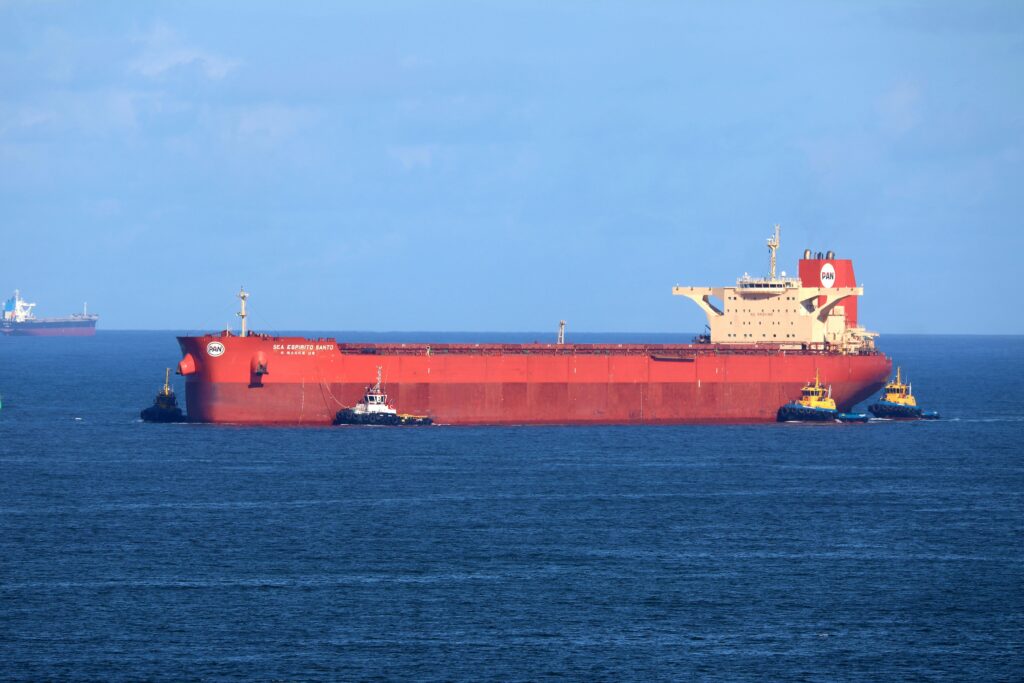
Ship tracking data shows at least 150 oil and liquefied natural gas tankers anchored in Gulf waters, waiting for safer conditions before attempting to pass through the Strait. Several vessels have already been struck near the chokepoint, including a tanker set ablaze off Oman and a U.S. flagged vessel damaged near Bahrain.
The disruption is quickly expanding beyond energy markets into global shipping. At the same time the Strait of Hormuz faces heightened risk, Houthi attacks have resumed in the Red Sea and the Bab el Mandeb corridor, threatening the route that connects the Suez Canal with Asian trade lanes.
Together, the Strait of Hormuz and the Suez corridor handle roughly one-third of the world’s seaborne crude oil trade as well as a significant share of container shipping. Analysts say simultaneous disruption of both routes creates an unprecedented dual chokepoint crisis for global commerce.
Major container shipping companies have already begun rerouting vessels. Global carriers including Maersk, Hapag Lloyd and COSCO have suspended or halted transits through the Gulf and are redirecting ships around the Cape of Good Hope, adding weeks to voyage times and increasing shipping costs.
These delays could cascade across supply chains worldwide. Companies that rely on just in time inventory systems or complex global sourcing networks may face shortages weeks after the initial disruptions as delayed shipments ripple through manufacturing and retail distribution.
Asia is particularly vulnerable to the energy shock because many Asian economies depend heavily on oil and gas imports from the Gulf region. Europe and the United States would also feel the impact through higher fuel prices and inflation.
Economic modeling suggests that a prolonged disruption could have severe consequences. Capital Economics estimates that $100 oil could add about 0.6 to 0.7 percentage points to global inflation. Analysts also warn that if shipping through the Strait remains disrupted for more than 30 days, the risk of recession for major energy importing economies rises sharply.
The conflict is also reinforcing a broader shift in global economic strategy. Analysts say geopolitical tensions are accelerating the fragmentation of the global economy into competing regional blocs centered around the United States, Europe and China.
For businesses and investors, the immediate challenge is managing risk. Companies with supply chains tied to the Persian Gulf are being urged to audit their exposure quickly and secure alternative suppliers or logistics routes before shipping capacity tightens further.