For most students, the transition from high school to college brings the usual mix of nerves and excitement. For Caitlyn Jensen, a senior biotechnology major, it also brought a life-changing diagnosis.
Back in her senior year of high school, Jensen went to the doctor for what she thought was a simple sick visit. “I thought I had mono because my best friend had it,” she recalled. “Instead, they told me my thyroid looked enlarged.”
Initial scans revealed nodules on her thyroid. Those nodules were scored on a scale that measures the likelihood of malignancy, and Jensen’s results came back suspicious. That is when her journey with thyroid cancer began.
The biopsy confirmed the worst. “It was honestly one of the hardest parts,” Jensen said. “They insert needles into your neck and have to shake them around to collect cells. It was horrible.”
By her first year of college, Jensen knew she had thyroid cancer. In December, during winter break, she underwent surgery. While some patients can have a partial thyroidectomy, Jensen’s situation was more complex.
“I had three tumors, one on each lobe of the thyroid and one in the middle,” she said. “So they had to remove my entire thyroid and some lymph nodes.”
When the pathology came back, it showed the cancer had already spread to her lymph nodes. That meant additional treatment was unavoidable.
During spring break of her first year, Jensen underwent radioactive iodine therapy. A treatment that works because thyroid cells absorb iodine more readily than other cells. To starve the cancer, she had to follow a strict low-iodine diet beforehand.
“It’s way harder than it sounds,” she said. “Even things like dairy, processed foods, and red dye have iodine.”
The treatment itself left her temporarily radioactive: “I had to quarantine for a week. My saliva, sweat, everything was radioactive. I couldn’t hug my mom. I couldn’t be near anyone. That was one of the loneliest parts of it all.”
Thankfully, the treatment worked, and her scans came back clear. But her story didn’t end there.
Because of the surgery, Jensen developed a rare lifelong condition called hypoparathyroidism. The parathyroid glands, which regulate calcium levels, were damaged and eventually stopped functioning. “It’s scary,” she admitted. “If my calcium drops too low, I can go into seizures or even cardiac arrest.”
One frightening episode happened in class last year: “The ambulance had to pick me up right out of lab,” Jensen said. “It was terrifying.”
Today, she takes daily medications to replace her thyroid hormones and to stabilize her calcium. She has frequent blood work and monitoring, and despite her resilience, the condition continues to shape her life.
Jensen has faced other chronic illnesses since childhood, which gave her a measure of resilience. “Honestly, I was used to hearing diagnoses,” she said. “For me, it felt like another specialist to add to the list.”
“I’ve always been independent. My mom raised me as a single parent, and I learned to just get things done. Now, there are days I can’t drive or even walk far without help. Asking for support has been humbling.”
Even so, she tries to hold on to her independence while trusting those closest to her. “It’s not easy to feel vulnerable in front of friends or classmates,” she said. “But I’ve realized relying on others is also a kind of strength.”
For Jensen, one of the most difficult things to hear was people calling thyroid cancer “the good cancer.”
“People would say, ‘Oh, you’ll be fine, it’s treatable.’ But it’s still cancer. It still sucks. And in my case, it spread, and I’ll live with the complications forever.”
Her advice to others newly diagnosed: don’t minimize your own journey. “Every story is different. Even if it’s treatable, it’s still real and painful. Don’t let anyone make you feel like it doesn’t matter.”
She also encourages students to use accommodations and lean on their support systems. Professors in the Biology Department, she said, have been incredibly understanding. “I used to feel guilty asking for extensions or accommodations. But my professors have been amazing, Dr. Jane Cavender even let me lie down in her office if I was having an episode. Honestly, I wouldn’t still be in school without that support.”
Jensen also found encouragement in patient support groups, both online and in person. “Doctors don’t always know every complication. Other patients can share tips and advice that make a huge difference. It helps with mental health too. Being able to talk to people who just get it.”
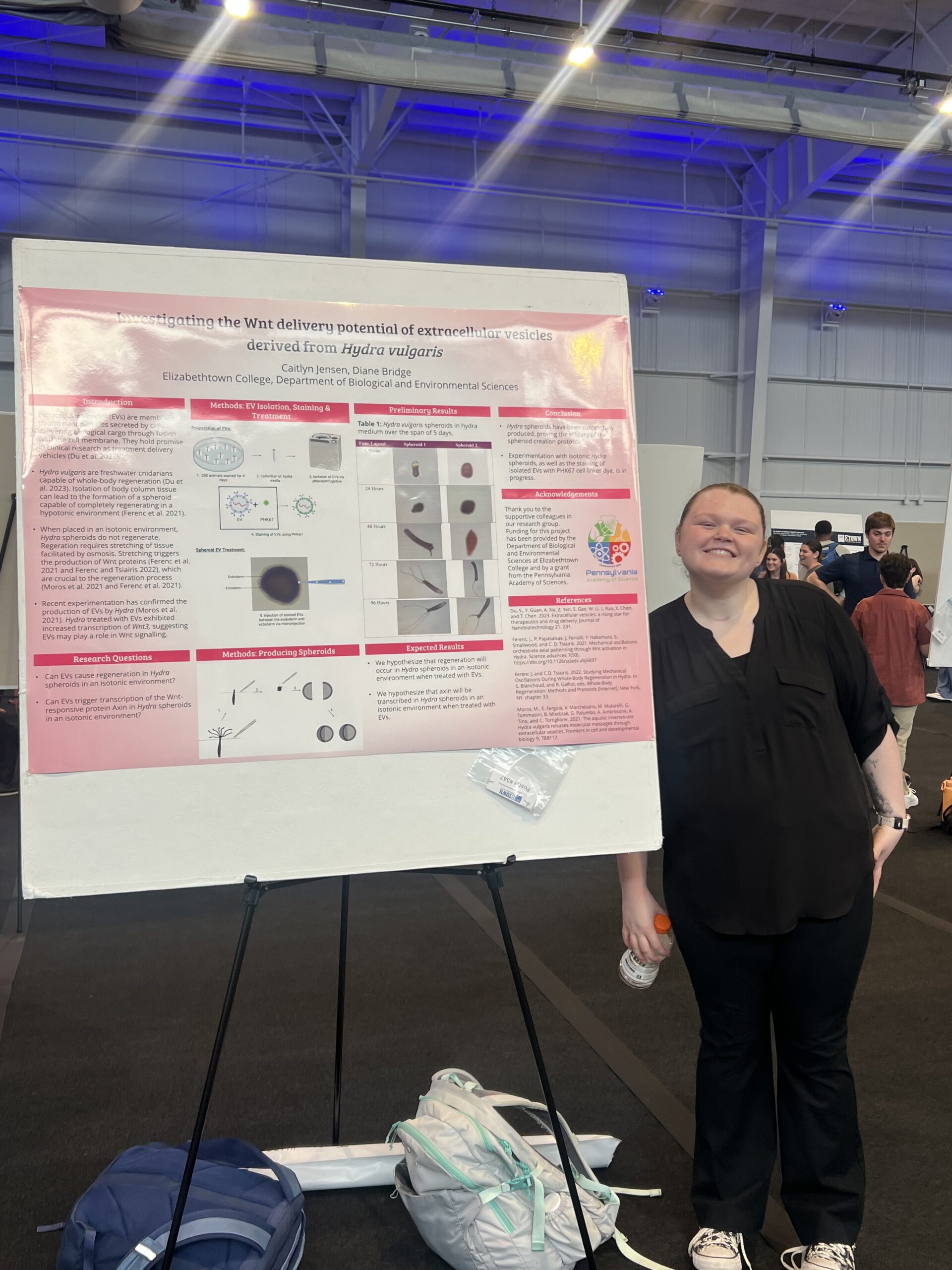
Now cancer-free, Jensen is focused on completing her biotechnology degree and preparing for what’s next. She knows her path may not look like everyone else’s, but she is at peace with that. “Your success might look different, and that’s okay,” she said. “It’s still success.”
For classmates who may be privately battling illness, Jensen wants them to know they are not alone. “Trust your circle. People care more than you think. And use the resources available to you. Professors, accommodations, support groups. There’s no shame in asking for help.”
Despite the challenges, she remains grateful. “I’m thankful for my friends, my professors, and my mom. I’ve been through a lot, but I’m still here, still smiling.”
And as graduation nears, her story stands as a testament not just to survival, but to strength, resilience and the power of community.