
As Halloween weekend approached, some as well as local law enforcement came together to host an alcohol awareness tabling event designed to highlight student safety ahead of one of the highest-risk social periods during the academic semester.
The event, which was held in the KAV, brought together representatives from the local borough police department, the on campus Criminal Justice Club, as well as several other campus health and wellness organizations.
Together, the participating groups hoped to engage students through interactive demonstrations, educational distribution and active discussions surrounding responsible alcohol consumption, legal boundaries and other basic safety information.
“We want to provide space for education for students, and bridge that gap between the criminal justice system and the community,” said Tori Bond, criminal justice major. “We also think the topic of alcohol awareness is important. As a society we have gotten so comfortable with the topic of drinking and I do think we have lost sight of the dangers that come with it.”
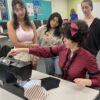
At the center of the event’s interactive programming was an activity that was supervised and tabled by members of the Etown borough police department. Officers set up a field sobriety test where students were invited to wear specialized distortion goggles, which are commonly referred to as drunk goggles, that simulate levels of blood alcohol concentration.
The goggles use specialized optics to distort depth perception, obscure peripheral vision, delay spatial reaction times and even impair physical coordination. Officers guided participating students through standard field sobriety tasks like walking a straight line heel-to-toe. This helps students visualize and experience the effects alcohol has on your perception and body, without actually drinking.
Positioned alongside the police demonstration, the Criminal Justice Club focused its efforts on educating peers about the legal system, student rights and personal accountability. Club members distributed informational pamphlets and engaged passing students in conversations regarding how legal citations can impact future career trajectories, particularly for those aiming to enter fields such as criminal justice, law enforcement, government service or legal practice.
“This event was right on the mark with the mission and goals of the criminal justice club,” said Bond. “We strive to educate our members on matters within the system; we always want to be learning more and build relationships with local law enforcement, which hopefully promote positive interactions between the public and the criminal justice system. I think bringing awareness to alcohol is something that all communities should be doing. Ultimately, the club strives to educate students about criminal justice while creating meaningful connections and making a positive impact on the surrounding community.”
Additional groups provided educational materials addressing the impacts of drinking. Tables offered brochures detailing things like standard drink measurements, the rate at which the human body metabolizes alcohol and the hidden risks of mixing alcohol with caffeine or prescription medications.
A primary focus of the tables was bystander intervention and alcohol poisoning recognition. Informational placards laid out the warning signs of medical emergencies, including unresponsive unconsciousness, irregular breathing, pale or bluish skin tones and persistent vomiting.
Peers were able to highlight the importance of looking out for friends during social gatherings and reminded students of campus and state Good Samaritan policies, which protect individuals from legal or disciplinary prosecution when seeking immediate medical assistance for someone experiencing an alcohol related emergency.
Scheduling the tabling session in late October was a deliberate strategy. Statistically, Halloween weekend is one of the highest periods for alcohol related incidents, emergency room visits and law enforcement interventions on college campuses nationwide. By establishing an event like this one to insert safety consciousness into students’ weekend planning before social activities began, helped remind students on how to stay safe.
Throughout the event, students passed through the tabling area, picking up educational brochures, were able to ask questions of local police officers and navigate the sobriety simulation.
As the campus transitions into the rest of the autumn semester, event organizers, student leaders and local law enforcement reiterated their commitment to keeping an open channel of communication and to continue to provide safety education throughout the academic year.