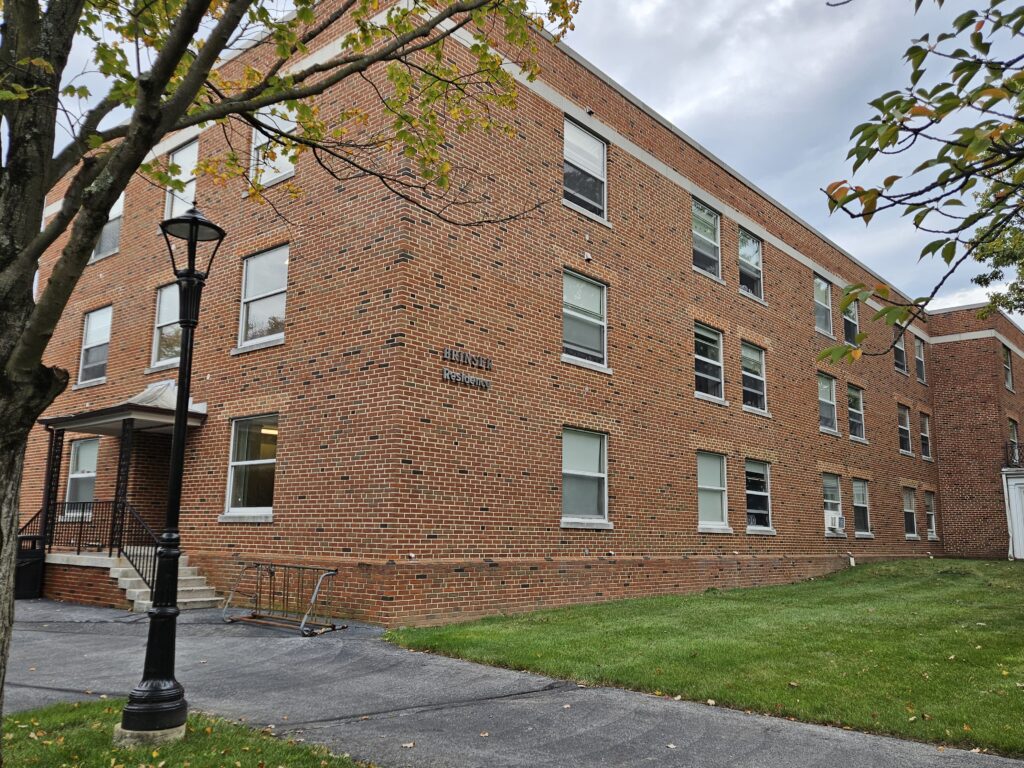
A campuswide email was sent out Oct. 8 informing the Elizabethtown College community that “elevated levels of Aspergillus/Penicillium mold” were detected in a student room inside Brinser Residence Hall.
“We take these concerns seriously and are committed to addressing them promptly and keeping our campus community informed,” Vice President for Student Life & Dean of Students Nichole Gonzalez and Vice President for Operations & Auxiliary Services Bob Kerin wrote in the email.
Aspergillus and Penicillium mold are two of the most commonly found molds both in buildings and in nature. Each type consists of several dozen species and are grouped together in tests because of their similar physiology. The spores of the fungi typically enter manmade structures via airflow or being tracked in on objects. The detection of “elevated levels” indicates that a high contraction of spores were present in the affected room.
Neither of these molds are inherently harmful. The antibiotic penicillin is a purified extract from Penicillium. However, high spore levels can cause symptoms such as irritated eyes, nose or throat, coughing or wheezing and skin rashes. The health risks are particularly acute for individuals with a mold allergy or respiratory issues such as asthma.
“It’s bad for anyone, but I have my own respiratory stuff to deal with,” sophomore Brinser resident Rita Tonsa said. “I have air purifiers and I mask on campus. I’m trying to protect myself when I’m out. [My room] is my safe space and I don’t need that compromised.”
Mold thrives in humid or damp environments, especially in buildings when moisture accumulates on or inside surfaces and objects. Several students have told the Etownian that Brinser is frequently humid and has a lingering musty smell inside.
“It’s just been really humid and sticky,” Tonsa said. “All of the pictures on my walls and my friends’ walls are curling up because of how humid it is and it generally feels swampy.”
This fall has been at times uncharacteristically warm and humid. Several days have seen temperatures break into the low eighties. The Millersville University Weather Information Center told LNP temperatures in Lancaster County this past summer were above average and so far that trend has continued into the fall.
A member of an Etown parents Facebook page posted on Sept. 28 several pictures of what appears to be two baseball caps displaying moldy growth, stating that they were taken in Brinser. In the pictures, patches of blue, black and yellow-colored mold can be seen on the brims of both caps. The Etownian has not verified any further context behind these images.
According to an unaffected resident of Brinser, the impacted room was on the first floor. The impacted residents have been relocated to a different residence hall while the mold issue is addressed. Etown administration has not confirmed any details or provided any further updates beyond the initial email as of writing.
The Office of Communications and Marketing provided the following statement in response to a request for comment sent to Facilities Management:
“Elizabethtown College continues to address the concerns outlined in its initial campus communication and is working directly with the students impacted.The broader campus community will receive updates as appropriate.”
According to the initial email, Campus Facilities responded within 24 hours of the initial report to conduct cleaning and testing of the impacted room. They are conducting checks for additional mold growth in Brinser.
The focus of the mold checks is on walls and carpeting where problematic growth would be most likely. Student belongings will not be inspected. Any students who believe they have found mold growth in their rooms should place a work order on Monday through Friday. Any concerns occurring on the weekend should be taken to Campus Safety. Facilities will address these in a timely manner consistent with the level of priority.