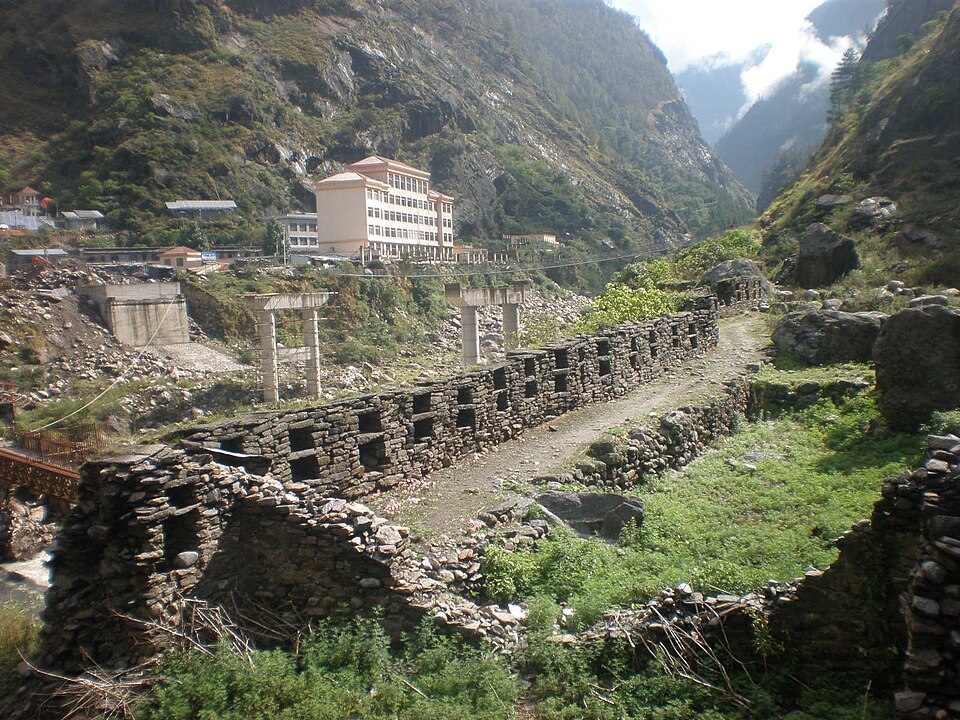
On Wednesday, Aug. 26, a massive flood and avalanche of debris devastated parts of northern Nepal. Over 1300 deaths have been recorded, and nearly 5000 are reported missing. Critical infrastructure and entire towns were destroyed, including Gyirong Port border crossing between Nepal and Tibet.
Kathmandu, Nepal’s capital and largest city with a population of around 900,000, was not struck by the floods, but the city has become crowded with people from the affected areas seeking shelter and emergency medical care.
The exact cause of the disaster is currently being investigated. It began near the Chinese border, where a 2000-foot-long chunk likely came off of a glacier and fell several thousands of feet into the Trishuli river. Scientists believe that a landslide was triggered, too, which contributed to the wave of debris.
The Nepali government mobilized the country’s army and police force to conduct search-and-rescue operations. They have reported the rescues of over 13,000 people, of whom over 300 are foreign nationals. Many of the rescued were flown to one of the several nearby cities for medical treatment.
The government worked quickly to replace destroyed vital infrastructure with temporary alternatives. Portable, pre-built bridges were installed where bridges had collapsed in order to reconnect affected areas with Nepal’s major cities. Solar-powered generators were supplied to Rasuwa District, one of the hardest-hit municipalities in the country, to keep households and healthcare centers running.
The United Nations Children’s Fund (UNICEF) has been working with the government of Nepal to get much-needed medical supplies, tents and food to the nearly 90,000 Nepali who lost their shelter and access to food, clean water and medical care in the blink of an eye. The United Nations has made a fundraising goal of nearly $50 million in order to provide more aid to the people affected as well as to start rebuilding the country’s economy and infrastructure.
This is far from the first devastating natural disaster in Nepal’s recent history. In 2015, a 7.8-magnitude earthquake struck the country. Approximately 9000 people were killed, and half a million homes were destroyed. According to The Asia Foundation, five years passed before most of the population was able to find new permanent housing. The recent floods caused an estimated $2.56 billion in physical damage according to Climate Home News, while it is estimated by the World Bank Group that the 2015 earthquake caused $7 billion. Nepal, having a GDP slightly under $50 billion, will likely struggle greatly with reconstruction as it did in 2015.
Nepalis’ pain, however, does not carry a price tag. Thousands of people are still missing or lost their lives, and thousands more lost friends and family members. Nepal’s government recently set up a telehealth program to provide physical and mental health support for those affected by the floods.
Environmental scientists told The New York Times that climate change was not the sole reason for Nepal’s floods, but that it was a contributing factor. Rising temperatures upset the environment’s careful balance and can increase the chances of glacial collapse and other natural disasters.
The rapidly-accumulating effects of climate change will only increase the frequency in which similar disasters occur from now on. According to PBS News, the UN recently announced that global warming will soon surpass 1.5 degrees Celsius above pre-industrial temperatures, which world delegates deemed the “safe temperature zone” in the 2015 Paris Climate Accord. The UN has stated a new long-term goal to halt and reverse global temperatures. The recent events in Nepal have proven that it is more important now than ever before for the world to take climate change more seriously.